Thursday, April 8, 2010

Book Review: Michael Faber, Under The Skin

Publisher/Year: Harcourt, 2001

Review
Taking on the challenge of reading a new genre or a new author can be an exhilarating experience. After reading Michel Faber’s Under The Skin, exhilarating is most assuredly not the appropriate descriptive I wish to attach to my dive into this author’s burgeoning oeuvre. No, this recent addition to my list of literary explorations this year requires something a little more centred, a little more meaningful. Grotesque? Possibly. Bewildering? Perhaps. Fucked up? Uh huh.

This may seem harsh, and for any offense to sensibilities I do apologize. But “what the fuck” synapsed through my brain from the start of the novel’s fourth page and continues to this moment of screen posterity. I do enjoy ‘thinking’ novels, and novels that take risks with the story, the storytelling, and the characters. The collision of all these elements within Under The Skin however had me quaking a wee bit in my chair with each turned page. Where was this story taking me, and was I going to survive the journey artfully plotted out by Faber?

Surviving the journey is one of likely a dozen themes cursing through Faber’s study of moral and character components of the human condition, and it is this theme that aligns the best with this particular reader. The story starts out with a woman named Isserly driving around Scotland looking for male hitchhikers. And not just any male hitchhiker – “She was looking for big muscles: a hunk on legs. Puny, scrawny specimens were no use to her.”

Once she has a ‘hunk’ in the car, Isserly questions them about their life and relationships. Her goal (it is revealed much later) is to assess who would miss the hitchhiker if they were to disappear. At the same time of this questioning, Isserly modifies her physical stance to best showcase her ample breasts for the men’s enjoyment. She well knows that her endowments are a valuable tool to loosen the tongues of her passengers. These conversations are verbally and physically awkward, as best demonstrated by Faber’s tactic of relaying each character’s internal dialogue alongside their external musings. The awkwardness of these encounters, however, serve their purpose well and consistently for Isserly. And those that provide the requisite answers to her test will wish they never had.

All of the story devices employed in the first chapter establish what is rarely achieved reasonably and without heavy-handed grasps at perfunct conclusions – the female as predator. This achievement is reinforced especially so at the conclusion of the narrative’s beginning when Isserly’s car turns into a modified Gadgetmobile and the passenger seat into an unexpected drug mule. She continues the journey to her intended destination, passes the cargo to her colleagues, and then heads for home.

But what is Isserly’s motivation? Is it sexual? Is it maniacal? Faber’s dialogue would lead you down the former path, with comments regarding “the bulge” in one of hunk’s pants. But nothing is as it seems, and Isserly’s nightly passages through the Scotland landscape is a spectacular narrative setup rather than mere sensationalistic and transitional plot point.

For you see, Isserly is not easily a vessel for the reader to project into for full character formulation. There is an odd alienation governing the reader’s relationship with Isserly that is revealed curiously throughout the novel. It is when the reader discovers that Isserly is to be positioned as alien, and not just in psychological rendering on page, that the experience of the novel heats up and the WTF moments increase.

Now, I must be careful of the term ‘alien’ in respect to this novel, as it hinges itself to many a physical and psychological attempt to predict the novel’s outcome. There are various references throughout the novel to Isserly’s discomfort resulting from the surgeries that drastically modified her physicality. In her mind Isserly is now ugly and a freak, her reconstructed body alien to her touch and consideration. Like everything else, the true scope of these surgeries is revealed in snippets that the reader must use to construct a crudely fashioned whole, a construction that flips the narrative head over feet.


Actually, it flips it head over hoof to be more appropriate. Isserly and her colleagues consider themselves human, and certainly Faber’s writing propels this understanding. But he also casts pointed moments of shadow by juxtaposing our understood beliefs of what is to be human against all the plays being made for those that are hunted, better known within the pages as vodsels. WTF, right?

The shadows begin to be cast longer with the arrival of Amlis Vess, the son of the owner of Vess Industries for whom Isserly works. Vess represents a rebelling against his father and the activities conducted at the farm with the vodsels. Isserly resists fully acknowledging his presence for as long as possible as it harshly reminds her of where she came from and what she has lost, for he represents all the beauty that she believes she no longer possesses.

When Isserly does make contact with Vess, she finds herself dealing with an attraction that inspires the vaguest of fantasies that he may also be attracted in return. Vess pushes Isserly to truly consider her actions and the resulting outcomes within the dynamics of the human-vodsel relationships. The beating heart within this novel is the pursuit of feeding the primal appetite in more ways than one. And what occurs in the relationship between Isserly and Vess places the spotlight firmly on this pursuit and all the complexities and paradoxes that comprise the ‘human’ condition informing that pursuit.

Faber has the pacing down pat – clues dropped seemingly at random propel forward to the next and the next. He sets the stage for a horror story, shifts gears to inject suspense elements, then navigates to allegory. All the threads start to jumble a bit as Faber connects his narrative dots yet he still patterns out an artful and coherent narrative landscape. And the conclusion is near perfect in its composition, by reminding the reader one last time that Isserly is not just a predator; she is also, potentially, the prey.

All this narrative jumbling is a-okay because nothing that could be put on paper will match the tiny bombs of philosophical fervor popping off in your head during the reading. Faber makes you want to have these bombs go off, no matter how uncomfortable you may end up feeling. He wants you to strive to figure out the answers alluded to between the lines, to make you work for the payoff.

On a superficial level, Under The Skin could be called bizarre or disturbing. These are certainly two adjectives I heavily used to describe the book to friends. But when I allowed myself to truly consider all that Faber sets forth – and he sets out a full plate to digest – the skill required to produce something so unique, so original is inspiring and curious. He does not back away from the more potentially gruesome elements of the story nor does he linger on them for the shock factor. Everything is presented in an almost matter-of-fact manner, like you are sitting down with a good friend and sharing tales over a drink.

This beat of comfortability, of familiarity is what snags your attention and aids the book in getting ‘under the skin’. It sounds clichéd - I know, I know - but there really is no better way to summarize the experience of reading Under The Skin. Faber instinctually knew what he could do to get and hold a reader’s attention, and he plotted it incredibly well. And if that attention is accompanied by more than few exclamations of ‘WTF?’, well, do not say I didn’t warn you.

Wednesday, April 7, 2010

Book Mark: Nikolski and Between The Covers

As you may know, Nicolas Dickner's Niksolski was the victor in this year's Canada Reads 2010 debates. We are still over the moon that it won, but more importantly that it was the book we choose to champion it in our mini-book club. Yes, this is all about us!  :-)


Between the Covers, a great CBC Radio podcast serializing the best in Canadian literature, has just finished posting their episodes for  Nikolski online for your listening pleasure.

Episodes 1 through 5
Episodes 6 through 20

Each episode is about 15-17 minutes, and well worth the time!

You can also check out all the Between the Covers podcasts in iTunes.

Tuesday, April 6, 2010

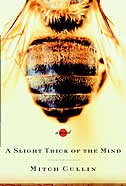
Table of Contents: A Slight Trick of the Mind

Author: Mitch Cullin
Publisher/Year: Doubleday, 2005
Synopsis: It is 1947, and the long-retired Holmes, now 93, lives in a remote Sussex farmhouse, where his memories and intellect begin to go adrift. He lives with a housekeeper and her young son, Roger, whose patient, respectful demeanor stirs paternal affection in Holmes. Holmes has settled into the routine of tending his apiary, writing in journals, and grappling with the diminishing powers of his razor-sharp mind, when Roger comes upon a case hitherto unknown. It is that of a Mrs. Keller, the long-ago object of Holmes's deep-and never acknowledged-infatuation.

As Mitch Cullin weaves together Holmes's hidden past, his poignant struggle to retain mental acuity, and his unlikely relationship with Roger, Holmes is transformed from the machine-like, mythic figure into an ordinary man, confronting and acquiescing to emotions he has resisted his entire life. This subtle and wise work is more than just a reimagining of a classic character. It is a profound meditation on faultiness of memory and how, as we grow older, the way we see the world is inevitably altered.


What Others Have To Say
The New York Times
"This is a novel about the fraying of reason under the stress of unanswerable emotional demands."

Salon
"...proceeds in a circling, unchronological manner that would have driven its subject mad with impatience, but so be it."

The Washington Post
"This is a lovely, tenderhearted book, full of reserve, good manners, elegance of feeling."

San Francisco Gate
"But taken as a whole, the novel lacks the tautness of a Conan Doyle mystery, and, deprived of a mystery around which to work, Sherlock Holmes is rendered even less real."

Monday, April 5, 2010

Line By Line: Carol Shields, The Stone Diaries

"It occurs to her that she should record this flash of insight in her journal - otherwise she is sure to forget, for she is someone who is always learning and forgetting and obliged to learn again..."

"At the edge of every experience is the refracted light of recollection snagged there like an image in a beveled mirror."

"It is inevitable that each of us will be misunderstood; this, it seems, is part of twentieth-century wisdom."

"It is frightening, and also exhilarating, her ability to deceive those around her; this is something new, her lost hours, her vivid dreams and shreds of language, as though she'd been given two lives instead of one, the alternate life cloaked in secret."

"He knows very well what underlies the compulsive side of his nature, it is the wish to escape that which he can't comprehend, seeking safety in an unbendable estrangement."

Saturday, April 3, 2010

Table of Contents: How To Be Single

Author: Liz Tuccillo
Publisher/Year: Simon & Schuster, 2008
Synopsis: Following a disastrous night out that began with steaks and martinis and ended in a trip to A&E, Julie Jenson decides that she and her four single friends are doing something wrong. Between them, there's more dysfunction and disappointment than she can handle. So Julie quits her job and sets off to discover how women around the world deal with the dreaded phenomenon of the Single Life. From proud Parisiennes to intense Italians, from ice-cool Icelanders to brazen Brazilians, Julie attempts to learn the secrets of these women's success. Will she come back with the answers? Or will her journey of self-discovery take her in another direction entirely?


What Others Have To Say:
Entertainment Weekly
"...offers witty insights and true-to-life tales — but an ending that borders on cheesy."

First Coast News
"As the women fret about their prospects, readers may be tempted to offer them some of the tough advice doled out in "He's Just Not That Into You.""

Express Milwaukee
"Ultimately, How to Be Single is a book that implies it has insight on the titled subject, but doesn't."
"

Thursday, April 1, 2010

Book Review: Andrew Davidson, The Gargoyle

Publisher/Year: Random House, 2009
Book Club: The Next Best Book Club 2010

Review
Andrew Davidson’s debut novel The Gargoyle has all the aspirations of bestseller dynamite, yet is clouded by the reality of reader contraction. Authorship pretensions bleed through on every page, through the clunky narration that at best limps along to a highly unsatisfactory and weary end. Davidson is, if nothing else, imaginative in his narrative formulations; however, the execution of these formulations runs the gamut from highly emotive to cringe-inducing.

The novel begins with high and seductive intentions, plunging its unnamed hero into a fiery self-apocalyptic adventure. A pornographer and cocaine addict, the hero runs off the road one night after witnessing a shower of arrows heading for him. He survives but suffers from horrific burns to the majority of the body, thanks to the explosive combination of the car catching fire and him having an open bottle of liquor in his lap.

While recovering in the burn unit, the hero learns that he has lost his good looks and his penis, and with that pretty much any will to live on. But, and it takes him awhile to accept this, he has also gained something in return - a mysterious female companion named Marianne Engel who claims to be his lover from the 14th century. Marianne is a sculptor well-known for her gargoyles that are high in demand by the wealthy. She is also a patient at the hospital, though a resident of the psychiatric unit and not the burn unit. Her assigned unit offers an explanation of sorts to the hero for the cryptic and history-steeped narrative formulations she hurls at the hero as fact.

The two become close, eventually resulting in co-habitation following the hero’s release from the hospital. Their slow-creeping closeness is not the resulting fantasy of a delusional mind paired with a psychically crippled one, as would be easy to conceive based on how the overarching story is initially positioned. Davidson leads the reader down the path in another direction, one that wishes to present a picture of calm sanity and battered redemption rooted in the ever-elusive tangible forces of love.

Through the months marking the hero’s recovery, Marianne reconstructs their love affair in installments that take on almost mythical proportions. She tells the hero of their first meeting, her a nun at a monastery at Engelthal and he a mercenary brought there for treatment after being hit by a flaming arrow. She nursed him back to health, renounced her vows, and fled with him to continue their apparently undying love affair. Her devotion to his recovery in the present mimics that expressed upon their initial engagement. Now, as then, it is Marianne who inspires the hero to live, to move beyond his blistering physical reality and to move towards the continuity of re-birth. To Marianne, “gargoyles ache to be born” and no such greater gargoyle has such a compulsive ache than the unnamed hero.

The release of their story is excruciatingly slow, a pace even noted by the hero, as Marianne weaves tales of inextinguishable love from around the world into their own. Viking Iceland, 14th century Italy, medieval Japan, and Victorian England all take resident in drawn out tragic tales that hinge on the four elements of air, water, fire, and earth to wring every ounce of romanticism for the hero’s edification. There is even a tour through Dante’s hell, a hallucinated travel positioned as a coda to previous narratives for the hero as he endures morphine withdrawal. All of these tales convey a common message – love outlasts death, as one or both of the intendeds will and must sacrifice in its name.

This particular episode could be considered the most vivid of the novel, not only because of the evocation of its literary predecessor but also because it is where the deepest disappointments of the novel become fully realized. Davidson is just not a strong enough author to follow through on fluidly projecting his imaginings onto the page. He constantly muddles his sensitivities to his own characters by imparting quick quips and descriptions of the inane (“a plump eggplant’s fecund belly pregnant with stuffing”) that serve to implode the intensity of the moment in favor of a more comforting middle ground. The commitment Davidson requires to own the audacity of his imagination and the characters engrossed within it is just not present on a consistent basis.

And without the consistency, it is taxing to move past the immobility of the present-day story and submerge into the collage of stories-within-stories that is The Gargoyle. While readers can allow themselves to be seduced by the possibility of ever-lasting love that spans centuries, it is markedly more difficult to believe that any of the characters marking the various tales were experiencing love. Little intimacy is portrayed, as Davidson does not excavate any of the emotional depth expected for such a grand topic. There is more sentimental sheen than true affection threaded throughout the novel, and unfortunately that is just not enough.

Davidson’s determination to make The Gargoyle a comprehensive whole is applaudable and a little enviable. He did not back away from the scope of his story, demonstrating an ambitious will for his entrance into the literary world. And he does deserve admiration for his skill at tackling physical descriptions ("I plumped up like a freshly roasted wiener, my skin cracking to accommodate the expanding meat"). Actually, he is perhaps a little too skilled as the first few pages can be more than a little assaulting on the senses.

Guaranteed, The Gargoyle will inspire decidedly different takes on how successful Davidson was on packaging his ambitions within its pages. It will be difficult though for the most ardent supporter to not agree that The Gargoyle suffers from wanting to be more substantial than it regrettably turns out to be.